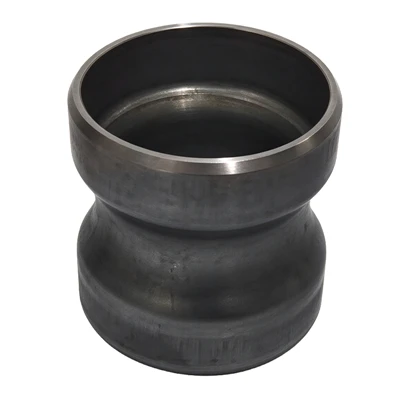

In terms of materials and manufacturing, control arm bushings generally fall into three categories: standard rubber, polymer polyurethane, and hydraulic types. Standard rubber is cost-effective but prone to aging; polyurethane offers excellent wear resistance and precise road feedback, though it compromises slightly on comfort; hydraulic bushings utilize internal fluid flow to further dampen high-frequency vibrations, striking a balance between comfort and handling. Industry standards impose strict durability requirements, typically necessitating millions of fatigue test cycles to ensure the bushings do not crack, delaminate, or exhibit abnormal stiffness changes under extreme temperatures or complex road conditions.
Rubber bushings: Offer a smooth, quiet, and comfortable ride at a low cost, but have a relatively short lifespan and are prone to aging and cracking.
Hydraulic bushings: Provide the best vibration damping and balance comfort with support, but are the most expensive.
Polyurethane bushings: High rigidity and minimal deformation result in responsive handling and durability; however, they transmit more road feel, sacrificing some comfort and increasing noise.